Thursday, February 9, 2017

Closing the 17-year gap between research and patient care


That's the time it takes for practitioners to apply the results of research by health scientists that could help in patient care 


By Daniel Niven
Expert Adviser
EvidenceNetwork.ca
Daniel Niven
Click image for Hi-Res
CALGARY, Alta. /Troy Media/ - Not many patients would be happy to hear there's a lag of about 17 years between when health scientists learn something significant from rigorous research and when practitioners change patient care as a result.
But that's what a now famous study from the Institute of Medicine uncovered in 2001.
The study reflects a major problem that has plagued health care for decades: the timely integration of high-quality scientific evidence into daily patient care.
If you knew there was research available to guide the health care you required, wouldn't you want your care provider and the system to use that research in relation to your care? Wouldn't you want to receive care that's scientifically proven to be of benefit, rather than care that's proven to be of no benefit?
Although it's been clear for centuries that science contributes to advancing medicine and improving disease-specific survival rates (for example, the discovery of penicillin and its effect on infection-related mortality rates), this concept only became popularized within the medical community toward the last quarter of the 20th century through the evidence-based medicine movement.
More recently, those who work in the field of 'knowledge translation' have been working hard to close the gap between research and practice. For the most part, they've been successful by making the abundant research findings more accessible to policy-makers, professional societies and practitioners, and nudging them to adopt more timely evidence-based practices.
Their methods have largely focused on the adoption of new beneficial practices - drugs, tests or interventions with substantial evidence behind them. But a pattern has emerged from the scientific literature: new is not always better and too much health care can be bad for your health.
Owing to the recognition that unnecessary practices may negatively affect patient outcomes - and contribute to burgeoning costs within health care - there is now a movement to promote the discontinuation of practices used in patient care that research finds to be of no benefit or potentially harmful. Initiatives such as the Choosing Wisely campaign, the Less is More and Reducing Research Waste have sprung from medical professional societies and high-ranking medical journals to help reduce the practice of too much health care.
It turns out that cervical cancer screening in women under 30 years old is not beneficial and may cause unnecessary follow up testing; the use of bone cement to treat painful spine fractures among patients with osteoporosis doesn't improve pain any more than usual care; and placement of stents in the coronary arteries of patients with narrowed arteries but minimal symptoms is no better than treatment with medications alone.
Other examples include reducing the use of a sophisticated monitoring device (pulmonary artery catheter) to obtain frequent measures of heart function in patients with heart failure and tightly controlling blood sugar using intravenous insulin in patients admitted to intensive care units.
For each of these examples, new research demonstrates that they don't improve patient outcomes, yet each persists to some degree in clinical practice.
The 17-year gap between research and practice traditionally refers to the time required to adopt new practices. Unfortunately, new research shows it may take even longer to abandon unnecessary practices. Shortening the gap between research and practice has been a long time coming, and can only help improve outcomes for patients and control health spending.
How do we get there?
Shortening the time between research and practice will require an increased understanding of what it takes to implement new research and a reduction in the time new research is reflected in professional guidelines.
Guidelines also need to be less cumbersome and directed more toward use at the point-of-care rather than simply a reference document. Health-care systems also need to be engineered so frontline providers have a greater likelihood of providing care congruent with current science. This is likely best facilitated by using comprehensive electronic medical records. Given that many health-care systems still employ the traditional paper-based charting and order system, this will require considerable financial commitment.
Moving from research to improved practice more rapidly will also take an engaged group of stakeholders - professional societies, health-care providers, patients and their family members, medical administrators and governments - who appreciate the long-term benefit possible from such considerable initial investment of time and money.
A health-care system that enables providers to consistently deliver care that aligns with recommended best practice should be a national priority.
Daniel Niven is an expert adviser with EvidenceNetwork.ca, an intensive care physician and assistant professor in the Departments of Critical Care Medicine and Community Health Sciences in the Cumming School of Medicine at the University of Calgary.
© 2016 Distributed by Troy Media

Wednesday, February 8, 2017

Globe Doctor Limited to Add New Features to Its Website


Globe Doctor Limited is a multilingual online medical portal that helps/assists the patients to find
 affordable yet good quality medical facilities located anywhere in the world.


Limited, an online portal of medical facilities worldwide announces addition of some very useful and advance features to its website. These features would help them to serve their customers in a better manner.

Globe Doctor Limited is a multilingual online medical portal that helps/assists the patients to find affordable yet good quality medical facilities located anywhere in the world. Over the last few years of its existence it has gradually gained popularity among the online searchers, all thanks to its easy site layout, comfortable usage and far fetching reach. To increase the ease and convenience for its visitors, Globe Doctor Limited is adding the following features to its website:
· For a global portal like Globe Doctor Limited, it becomes necessary to make their website and its content available at least in major languages of the world. Currently, the website is available in English, Spanish, Polish, Czech, Slovak, Turkish and Hungarian language. In addition to these languages, Globe Doctor Limited
is soon going to make the website available in German language too. This will also
 cater to the German visitors and help them to easily search the medical facilities
and know their services in their mother tongue.

· Globe Doctor Limited has also announced the addition of clinic reviews to their
 respective profile from November 2016. After the implementation of this feature,
every medical facility listed with Globe Doctor Limited will showcase some genuine
reviews from their visitors. This would help the visitors of Globe Doctor Limited in
deciding, whether to choose a particular medical facility or not.

· Visitors will also be able to get a complete guidance, for the website will provide
accurate information like the amount required to be invested in a certain operation
or diagnosis at a particular clinic. To give a thorough hand holding the site has
 upgraded the information standard and has included such minute and important
details like the amount. Thus, giving the patient an idea of the budget they need to fix.

The portal will be up and ready for the patient to refer to from coming November.
Globe Doctor Limited will then be able to assist you more smartly in your
quest for a good and affordable medical treatment abroad. To get more detail
about Globe Doctor Limited and their portal, one can log on to their website or
email them with their queries at info@globedoctor.com.

About the company:
Globe Doctor Limited is a multilingual online portal of medical facilities
providing users the facility to search for the right treatment they necessitate
and the right doctor in the right country on a single portal.
Contact Information
Globe Doctor Limited
David Fiala
353 85 749 49 08
Contact
6 – 9 Trinity Street, Dublin, Ireland, 2

Wednesday, January 25, 2017

New Frontier Foods Expands Ocean's Halo® Product Line Launching Delightfully Sweet Dark Chocolate Seaweed Strips


- The Seaweed Strip™ with Dark Chocolate Continues Industry-Leading Product Innovation

- Company also adding USDA Organic Sushi Nori to Product Line

- Chili Lime and Korean BBQ Expand Flavors of The Seaweed Snack™ Sheets

- Cerritos, CA Plant Now SQF Certified


BURLINGAME, Calif., Jan. 19, 2017 /PRNewswire/ -- New Frontier Foods, maker of Ocean's Halo® seaweed products, today announced a significant expansion to its product lines and manufacturing capabilities debuting at 2017 Winter Fancy Foods show on January 22nd through the 24th in booth #3000, at the Moscone Center in San Francisco, California. The new product offerings include:
  • A first-of-its-kind Dark Chocolate Seaweed Strip: Imagine two thin layers of seaweed surrounding a crunchy layer of Almonds or Coconut, with just the right amount of delicious dark chocolate in the middle. Both the Almond and Coconut skus are our highest-ever scoring products in pre-launch taste tests, and are an expansion to The Seaweed Strip™ product line.
  • Chile Lime and Korean BBQ Flavors Added to The Seaweed Snack™ Sheets:  Our popular USDA Organic sheeted seaweed snacks now have two new flavors – Chili Lime and Korean BBQ – which also remain available in Sea Salt, Maui Onion, Texas BBQ and Sriracha flavors.
  • Organic Ocean's Halo ® Sushi Nori – to satisfy growing market demand for at-home sushi products, a high-quality line of organic sushi nori will debut in the Spring 2017
  • US Production Facility Now SQF Certified – Our seaweed production facility in Cerritos, California was SQF certified in the fall of 2016. 
Commenting on the expansion, Ocean's Halo® co-founder Robert Mock noted: "Seaweed shouldn't be boring. Consumers deserve new and interesting products and we're going to be relentless in our pursuit of product innovation. We couldn't be more excited about the dark chocolate strips, new flavored sheets and the organic nori. And stay tuned for another completely new product later this year."
Shoppers can now find Ocean's Halo® Seaweed snack products in Whole Foods, Costco, Albertsons, Safeway & Vons, Ahold, Mollie Stones and a growing number of natural, grocery and specialty markets, co-ops and restaurants in the US and abroad. Ocean's Halo® is also sold on Amazon.com.
Retailers interested in ordering please email sales@oceanshalo.com. For more information about Ocean's Halo® and to find a retailer near you, go to www.oceanshalo.com or join the Ocean's Halo® conversation on Facebook at www.facebook.com/OceansHalo, Twitter and Pinterest @OceansHalo #SwimAgainstTheTide.
About New Frontier Foods Inc.  Based in the San Francisco Bay Area, New Frontier Foods Inc. was founded in 2011 by four dads on a mission to leverage the science of superfoods to make ordinary foods delicious and healthy. Ocean's Halo offers totally delicious crispy, crunchy snacks made from USDA Organic, sustainably harvested seaweed.  We are proud to donate two percent of our profits to organizations like the Monterey Bay Aquarium's Children's Education Fund program that is inspiring the next generation of ocean evangelists.


CONTACT: Press@OceansHalo.com


Monday, January 23, 2017

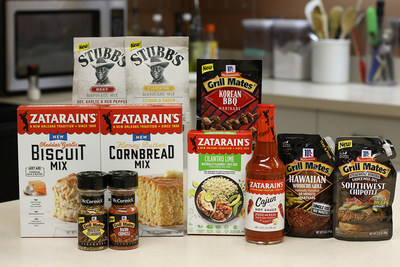
McCormick Announces Spring New Product Lineup


Cajun Hot Sauce, Korean BBQ Marinade, new offerings bring serious flavor to the grill and kitchen


HUNT VALLEY, Md., Jan. 19, 2017 /PRNewswire-USNewswire/ -- McCormick & Company, (NYSE: MKC) a global leader in flavor, is launching a range of new products bringing flavors from around the world, and across America to kitchens and grills this spring. The 17 new products answer consumer demand to explore regions through taste, while still offering ease and simplicity in the form of quick marinades, baking mixes and sauces.
"Beyond spicy or tangy, consumers want to experience the authentic flavors of places like Hawaii, New Orleans and Brazil," said Virginia Jordan, McCormick Vice President of Marketing. "Our new products make it easy to enjoy these tastes at home, whether adding a splash of Cajun Hot Sauce to fried chicken or marinating steak in our Korean BBQ marinade."
McCormick Grill Mates: With Hawaiian cuisine taking over the mainland, and churrascarias and Korean BBQ in towns across the country, these new Grill Mates liquid marinades, mixes and seasonings allow grillers to add flavors they enjoy at restaurants to cook-out staples this spring and summer.
Stubb's: New seasoning mixes were specially created to flavor different types of meat – from pork to steak and chicken – with big Texas taste.
Zatarain's: Hot sauce and biscuits are staples of the Southern food scene. Zatarain's first-ever hot sauce is made with aged red peppers, Cajun spices and big chunks of flavorful garlic. And, new mixes for flaky biscuits and crumbly cornbread are made with no artificial flavors, colors or preservatives.
For more new product information and high-res images, visit McCormick.com/SpringLineup.
About McCormick
McCormick & Company, Incorporated is a global leader in flavor. With $4.3 billion in annual sales, the company manufactures, markets and distributes spices, seasoning mixes, condiments and other flavorful products to the entire food industry – retail outlets, food manufacturers and foodservice businesses. Every day, no matter where or what you eat, you can enjoy food flavored by McCormick. McCormick Brings Passion to Flavor™. For more information, visit www.mccormickcorporation.com.
CONTACTS:
Laurie Harrsen
McCormick & Company, Inc.
410.527.8753
Laurie_Harrsen@mccormick.com
Lauren O'Leary
APCO Worldwide
646.556.9323
Loleary@apcoworldwide.com

Friday, January 20, 2017

Creating A Profession And Improving Health: Academy of Nutrition and Dietetics Celebrates Its Centennial In 2017

Creating A Profession And Improving Health: Academy of Nutrition and Dietetics Celebrates Its Centennial In 2017
CHICAGO, Jan., 2017 /PRNewswire-USNewswire/ -- The Academy of Nutrition and Dietetics, the world's largest organization of food and nutrition professionals, will celebrate its 100th anniversary in 2017 by honoring the dietetics profession and forging a new vision for the Academy's Second Century.
For the past 100 years, the Academy (www.eatright.org) has been dedicated to building a profession that optimizes health through food and nutrition. The Academy was founded as the American Dietetic Association in 1917 by a visionary group of women committed to taking on the greatest food and nutrition challenge of the day: conserving food, feeding the troops and nourishing Americans while combating malnutrition in the face of severe food shortages during World War I.
"Our founders created an organization and a profession that changed the course of food, nutrition and health," said registered dietitian nutritionist and the Academy's 2016-2017 President Lucille Beseler.
Today, the Academy represents more than 100,000 registered dietitian nutritionists and dietetic technicians, registered, working across the food and health spectrum in hospitals, foodservice, academia, business, wellness, agriculture, public health and private practice. The Academy continues to provide unequalled, evidence-based nutrition practice resources for its members and health professionals.
"The Academy of Nutrition and Dietetics has built on the legacy of our brave and inspirational founders as we address food and health systems that have changed significantly, becoming more global and complex," Beseler said.
"The ability to feed people and feed them well is a challenge we face in our homes, our schools, our communities, our nation and around the world. Yet these challenges also present unique opportunities for innovation and collaboration between nutrition professionals and other leaders," Beseler said.
A significant part of the Academy's Second Century includes expanded international collaborative relationships. In September 2016, the Academy convened the Nutrition Impact Summit, which brought together nearly 200 Academy members and thought leaders in food, wellness and health care systems to identify potential projects and strategic partners in the U.S. and worldwide. 
"Honoring our legacy means unflinchingly addressing the health challenges of the present day, our present century and the next. The Academy's vision for the Second Century is grounded in an extraordinary commitment to collaboration, a focus on service and an emphasis on creating a world where people and communities flourish because of the transformational power of food and nutrition," Beseler said.
The Academy will commemorate its centennial throughout 2017, at the Academy's Food & Nutrition Conference & Expo™, to be held October 21 to 24 in Chicago.
All registered dietitians are nutritionists – but not all nutritionists are registered dietitians. The Academy's Board of Directors and Commission on Dietetic Registration have determined that those who hold the credential registered dietitian (RD) may optionally use "registered dietitian nutritionist" (RDN) instead. The two credentials have identical meanings.
The Academy of Nutrition and Dietetics is the world's largest organization of food and nutrition professionals. The Academy is committed to improving the nation's health and advancing the profession of dietetics through research, education and advocacy. Visit the Academy at www.eatright.org


CONTACT: Rhys Saunders, 800/877-1600, ext. 4769, media@eatright.org


Wednesday, January 18, 2017

Cheesy pull-apart bread

Cheesy pull-apart bread

Made with hand-stretched cheese that’s made to be melted, this party-sized appetizer makes an impressive entrance and tastes even better than it looks.


Ingredients

(700 g) round loaf of bread
3/4 cup (175 mL) salsa verde, homemade or store-bought
10 oz (300 g) Canadian Mozzarella, sliced

Salsa verde:
clove garlic
1/2 onion, coarsely chopped
jalapeno pepper, seeded
1/2 cup (125 mL) cilantro
1 can (820 mL) whole tomatillos, drained
Lime juice
Salt


https://www.dairygoodness.ca/recipes/cheesy-pull-apart-bread

Monday, January 16, 2017

Why we can't dismiss caring for the old
The health-care system must do better at addressing conditions that restrict how we live as we get old


By Kenneth Rockwood
Contributor
Troy Media
Kenneth Rockwood
Click image for Hi-res
HALIFAX, N.S. /Troy Media/ - Should medicine be ageist?
A young trainee doctor recently proposed to me that it should. Health care is overstretched, she argued. "We can't do everything for everyone, so why spend money on old people, who have little chance of benefit?"
For her, ageism is not all that bad - in fact, it's a practical response to limited resources.
I'm unpersuaded. Ageism is not benign. We fail older people when we treat them, as typically we do, in ways that are at odds with how ageing works. Ageism masks our need to do better.
The challenge is the complexity of ageing. With age, almost all diseases become more common.
Health care has become pretty good at assembling teams that specialize in specific problems, creating focused, subspecialized care.
And patients do best when their single illness, no matter how complicated and no matter what their age, is their main problem. Subspecialized care may work very well for them.
But as we age, we're more likely to have more than one illness and to take more than one medication. And as we age, the illnesses that we have are more likely to restrict how we live - not just outright disability, but in our moving more slowly or taking care in where we walk, or what we wear or where we go.
Not everyone of the same age has the same number of health problems. Those with the most health problems are frail. And when they're frail, they do worse. Often, those with frailty do worse because health care remains focused on single illness. Our success with a single-illness approach has biased us to think that this is the approach we should always take.
When frail people show up with all their health and social problems, we see them as illegitimate or unsuited for what we do.
So would the young doctor be right if instead of restricting care in old people, she simply opted for restricting care for frail people? Should frailism be the new ageism?
For health care, such a notion would be self-defeating. If frail patients are unsuited to the care that doctors provide, we must provide more suitable care.
Frail older adults consume a lot of care. Far better that those of us in the health system treat them as our very best customers. That would improve care for everyone.
No one admitted to hospital benefits from poor sleep, but (mostly) we get away with it in our fitter patients. Not so in the frail, in whom it leads to worse outcomes: longer stays, more confusion, more medications, more falls and a higher death rate.
No one benefits from being immobilized too long. No one benefits from not having medications reviewed, or from poor nutrition, or inadequate pain control, or getting admitted when care at home would be better or in not clearly discussing goals of care. Just because the health system mostly gets away with it in fitter patients is no reason to forego change.
Changing routines to improve care will benefit everyone. But it won't happen if we see frailty as an acceptable form of ageism. We need to invest in better care and in better understanding how to design, test and implement it.
As important as subspecialties are, by definition each subspecialty group benefits a small fraction of people. The skills required to provide expert general care, particularly for frail older adults, have been less celebrated. Compared to disease research, ageing and frailty are barely on the funding radar screen.
In any guise, ageism can be insidious. We don't have to go far to find it. I find it in myself when I'm in a long line. It's not the science of how movement becomes slow that saves me then - it's realizing that slowness is not a moral failing, much less one directed at my busyness.
What we do in our health system now fails older people who might benefit if we provided better care. In that way, it fails us all.
Attitudes must change. Medicine should not be ageist. It shouldn't even be frailest. We must work to provide better care for frail older adults, especially when they are ill.
Kenneth Rockwood is a geriatrician in Halifax, N.S., and a researcher with Canadian Frailty Network (CFN), a not-for-profit organization dedicated to improving care for older Canadians living with frailty.
© 2016 Distributed by Troy Media